Book
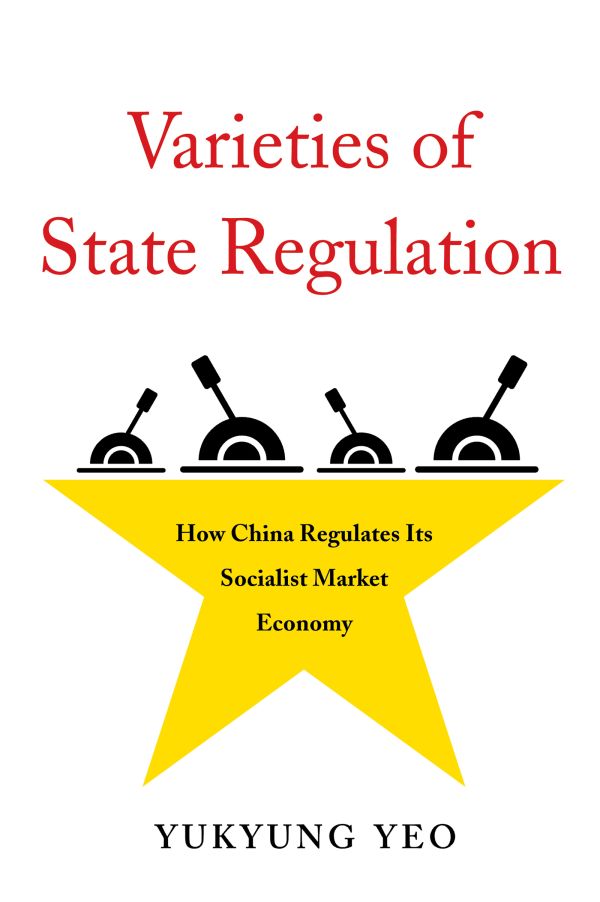
This book is based on ten years of fieldwork in China and offers a comparative analysis of how the Chinese party-state regulates strategic industries, focusing on the telecommunications and automotive sectors. Despite more than four decades of market-oriented reforms since the start of Reform and Opening in 1978, the book explains how China’s central party-state regulates the market and exercises political oversight over “strategic industries” that are closely tied to national economic interests and security, regardless of ownership structures, governance arrangements, or the share of foreign capital.
By deconstructing the market into institutional components such as property rights, governance structures, and the concept of control, this book shows that infrastructure industries like telecommunications—strategic sectors where the Communist Party’s control is essential to regime stability—exhibit strong centralization of governance through centrally owned state-owned enterprises and “hard regulation” enforced by formal regulatory bodies.
In contrast, although the automotive industry is also strategically important for industrialization and economic development, it has historically been characterized by decentralized ownership and a pivotal role for foreign capital and technology. As a result, the central government and party organizations rely more on informal mechanisms for political oversight and regulatory control in this sector. The book conceptualizes this approach as “soft regulation.”
Through this analysis, the book contributes to the study of China’s political economy by moving beyond monolithic understandings of state capitalism that emphasize a uniformly dominant state. Instead, it conceptualizes and explains the diverse patterns of state regulation across industries. This framework addresses the limitations of traditional approaches that attempt to interpret China’s state-market relations through Anglo-American, continental European, or East Asian developmental state lenses, and better accounts for the complexity and variation in party-state-market relations within China’s socialist market economy.
In essence, the book highlights that in strategic industries essential to maintaining the stability of Communist Party rule, neither state-owned enterprises nor private firms nor foreign joint ventures are free from central party-state regulation. Considering the ongoing institutionalization of the Party’s intervention in markets under Xi Jinping’s leadership, and the likelihood that such Party-centric governance will persist or even expand, this book provides a timely and meaningful contribution to understanding China’s political economy.